

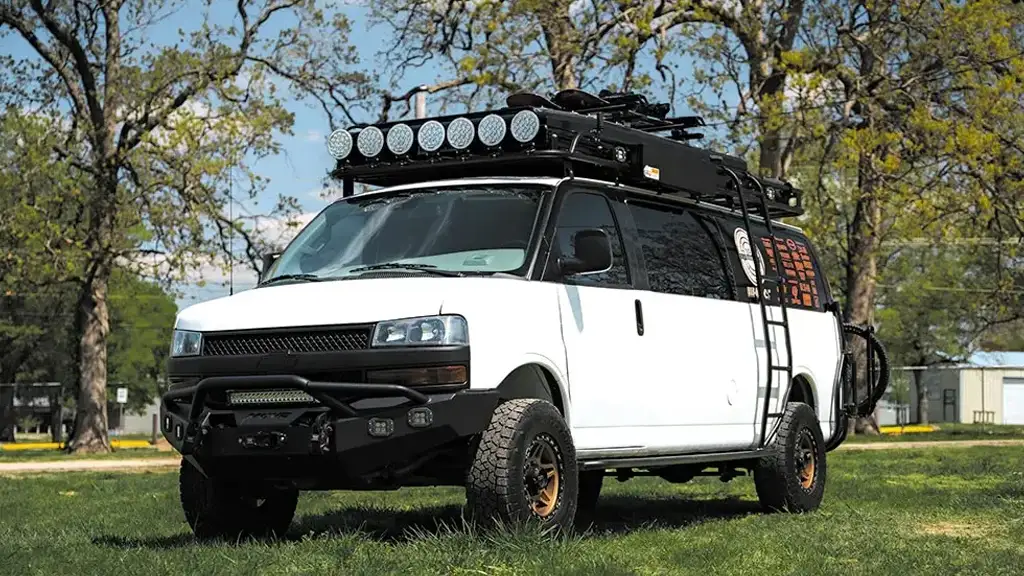
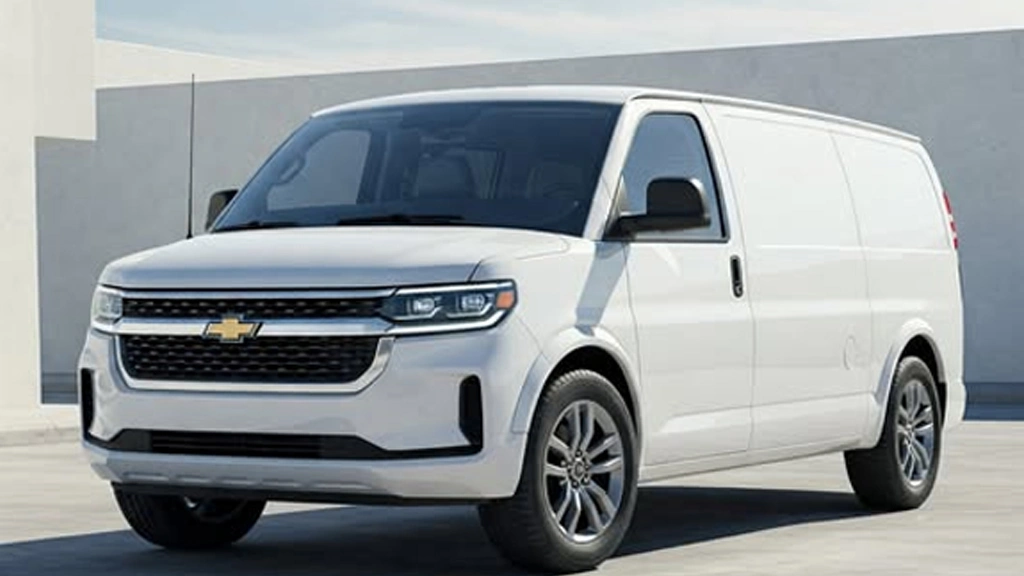
If you’ve ever driven down a highway in the U.S., you’ve seen it. It’s the boxy, no-nonsense van with the same basic shape it’s had for decades—maybe with a faded corporate logo, a plumber’s ladder rack, or a U-Haul decal. It’s the Chevrolet Express (and its GMC twin, the Savana), and it’s not just a vehicle. It’s a rolling testament to American practicality, a middle finger to planned obsolescence, and proof that sometimes, “if it ain’t broke, don’t fix it” isn’t just a cliché—it’s a business model.
Let’s get one thing straight: The Express isn’t here to win design awards. It’s here to work. And work it does. For over 30 years, GM has kept this van in production with little more than a few tweaks—no flashy redesigns, no over-the-top tech, just a steel body, a powerful engine, and the kind of durability that makes it the automotive equivalent of a Timex watch: it takes a lickin’ and keeps on tickin’.
The Van That Time Forgot (On Purpose)
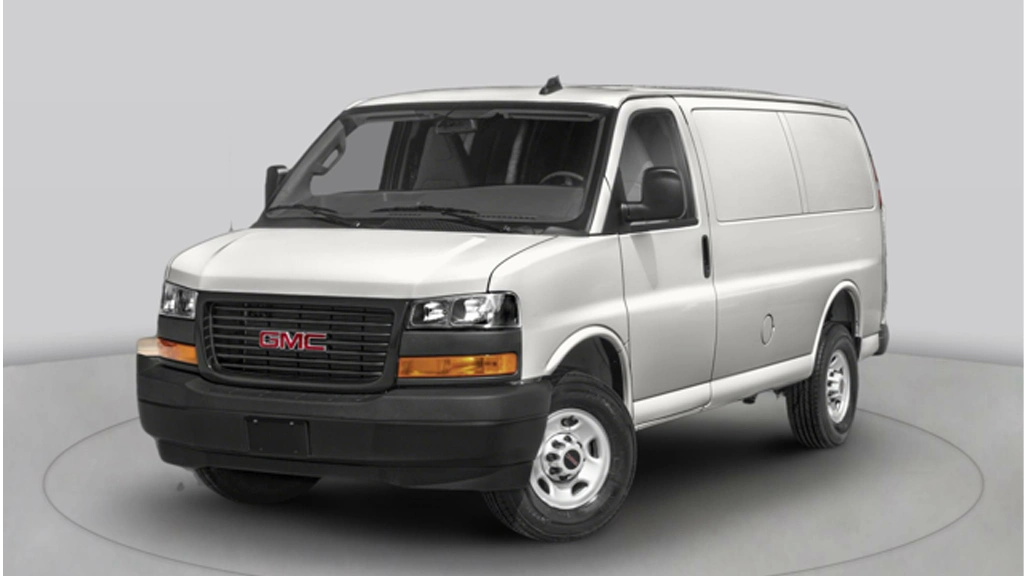
Walk into a Chevy dealership today and ask to see the 2024 Express, and you might do a double-take. It looks… familiar. Like,1990s familiar. That’s because GM hasn’t seen the need to reinvent the wheel. Why? Simple: The tooling’s paid off, the van still sells, and redesigning it would cost a fortune. As one owner put it, “They’re printing money with this thing.”
GM’s strategy is genius, if a little old-school. Instead of churning out new models year-round, they build Express vans in batches—once or twice a year, dealers place orders, and then GM cranks them out over a month or so. No fancy production lines running 24/7, no expensive updates. It keeps costs low, and for a work van, that’s gold. Think of it as the Volkswagen Beetle of the van world: same basic shape, same core functionality, just enough tweaks to keep it legal and reliable.
But why not update it? After all, every other automaker is rolling out sleek, Euro-style “tallboy” vans with sliding doors and fuel-efficient engines. Here’s the thing: GM doesn’t need to. The Express occupies a niche no one else is filling: it’s the last true body-on-frame van on the market. For tradespeople—plumbers, electricians, contractors—body-on-frame means durability. The frame takes the abuse, not the body, so you can load it up with tools, tow a trailer, or bounce over potholes without worrying about the van falling apart.
And let’s talk towing. The Express isn’t just a cargo hauler—it’s a beast. With the available 6.6L V8 gas engine (or the turbo diesel, a favorite of FedEx and other delivery fleets), it can yank 9,000 to 10,000 pounds. That’s more than enough for a work trailer, a boat, or even a small camper. One owner gushed, “I bought a 2024 Express passenger with the 6.6, and it’s a beast—not terrible mileage either.” Even the older 6.0L Vortec engines (still common in U-Haul trucks) “haul ass,” as another fan put it. When you need to move heavy stuff, the Express doesn’t mess around.
No Tech? No Problem. The Anti-Trend Van
In an era where cars come with touchscreens the size of iPads, driver-assist features that nag you to stay in your lane, and “lifestyle” marketing that makes you feel inadequate for not owning the latest model, the Express is a breath of fresh air. Or, depending on your perspective, a relic.
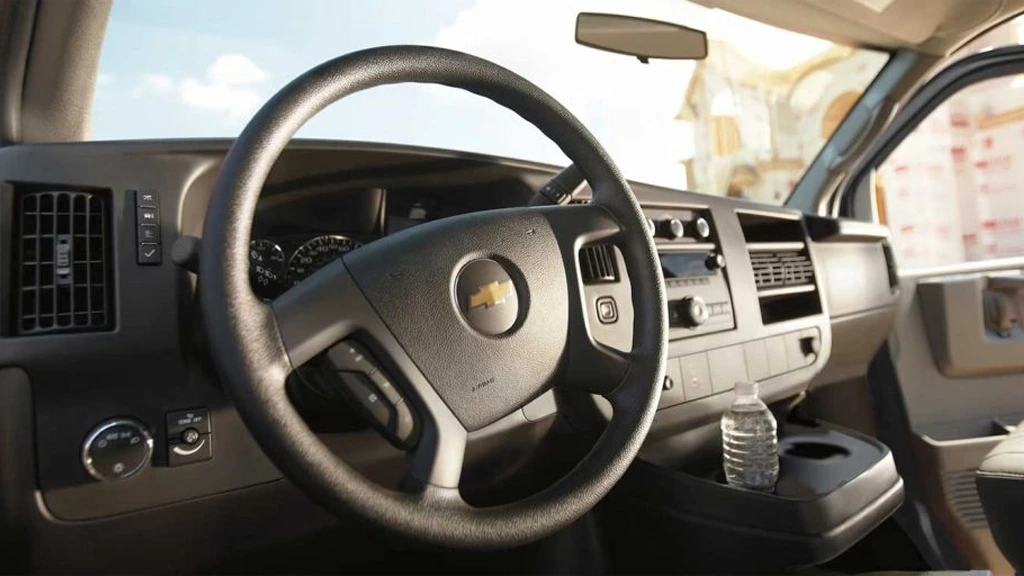
Let’s list the “features” (or lack thereof): A basic radio. A naturally aspirated V6 or V8 (no turbos, no hybrid nonsense). Rear-wheel drive (no fancy AWD here). Sealed-beam headlights (more on those later). Bluetooth? Optional. That’s it. No lane-keep assist, no adaptive cruise control, no “infotainment” system that requires a software update every six months.
And that’s exactly why people love it.
“This is the official car of hating change,” one commenter joked. “These are bought by companies who haven’t hired someone to redesign their corporate wrap since they were forced to digitize it back when Adobe Illustrator still came on a disk.” It’s not a dig—it’s a compliment. For businesses that just need a van to get the job done, the Express is perfect. No learning curve, no expensive repairs when the tech fails, just a simple machine that does what it’s told.
Take the interior: It’s utilitarian. Hard plastic surfaces that wipe clean, seats that stand up to mud and grease, and storage cubbies everywhere. No leather, no ambient lighting, no “premium” materials. Why? Because plumbers don’t need heated seats—they need a place to toss their tools.
Even the optional tech is minimal. Bluetooth? Sure, if you want it. But most owners don’t care. “I just need a radio to listen to the game while I drive,” one contractor told me. “Why pay for a screen that’ll break when I drop a wrench on it?”
The Great Sealed-Beam Debate: Why Some Love (and Hate) the Old-School Lights
If there’s one thing Express owners argue about, it’s the sealed-beam headlights. For the uninitiated, sealed beams are the old-school, all-in-one headlight units—no replaceable bulbs, just a glass lens with the bulb sealed inside. They’re simple, cheap to replace, and… kind of terrible.
“I drove one with sealed beams and another with halogens—the difference was night and day,” one driver complained. “Sealed beams are dim, yellow, and they don’t last as long.” Another owner recalled swapping out the factory sealed beams on their 1994 Miata: “Exactly one night drive on an unlit road, and I remembered why my teen years were spent fitting H4 bulbs to every sealed-beam car I owned.”
But here’s the twist: Some people like sealed beams. They’re easy to replace (no messing with bulbs or ballasts), and they’re rugged. “If you’re off-roading or driving on gravel roads, a sealed beam is less likely to crack than a fancy halogen or LED lens,” one defender argued. Plus, they’re cheap—you can pick up a pair for $20 at AutoZone, whereas an LED headlight might cost $100 or more.
GM has slowly phased out sealed beams on newer models, offering halogen and even LED options, but the debate lives on. It’s just another example of the Express’s charm: it’s stuck in its ways, but in a way that feels intentional, not outdated.
Real-World Love: From Mormons to Michigan Highways
Drive through Michigan, and you can’t miss the Express. “I see 10-15 a day on the highways—various colors, logos, and the occasional turbo diesel clattering away (usually FedEx trucks),” one observer noted. In small towns, they’re everywhere: electricians’ vans with ladders on top, church vans shuttling kids to events, even families using them as budget-friendly campers (hello, conversion vans).
Mormons, in particular, seem to have a soft spot for them. “Mormons buy a lot of them in my town,” one commenter mentioned. It makes sense: big families, need for space, and a preference for reliability over flash.
Then there are the die-hard owners. Take the guy with a 2013 Savana flat-top Explorer conversion: “I will drive this van until it dies. Unkillable V8, tows like a boss, incredibly reliable, cheap to run, and way faster than it needs to be.” Or the person who dreams of buying a brand-new Express, even though they “have basically no need for a van.” There’s something appealing about owning a “new old” vehicle—a machine that feels timeless, not disposable.
Resale value is another win. “Even with 200K+ miles, it’ll still resale for a profit!” one owner bragged. Tradespeople know: a used Express with high mileage is still a solid investment. It’s not uncommon to see 10-year-old models with 300,000 miles still on the road, chugging along like nothing’s wrong.
The Future: Will GM Ever Kill the Express?
Here’s the million-dollar question: How long can GM keep building the same van? The answer, it seems, is “as long as it sells.”
The Express isn’t just a cash cow—it’s low-risk cash cow. The tooling and development costs were paid off decades ago, so every van sold is almost pure profit. And with no direct competition in the body-on-frame van segment, GM has a monopoly on tradespeople, delivery companies, and anyone who values durability over style.
Compare it to the Toyota Land Cruiser, another icon that’s barely changed in decades. “Wait till this guy hears about Land Cruisers they’re selling in other parts of the world,” one commenter joked. GM’s strategy isn’t unique—it’s just rare in an industry obsessed with “new and improved.”
Some point to GM’s history with long-running platforms, like the W-body (think Chevy Impala, Pontiac Grand Prix), which stayed in production for over 20 years. “It’s peak GM to replace a long-running platform because it’s old with a platform that runs even longer,” one observer noted. The Express could be next.
But here’s the kicker: Even if GM did redesign the Express, would anyone care? Tradespeople don’t want a “modern” van with a unibody and a tiny turbo engine—they want the same tough, simple machine they’ve relied on for years. As one owner put it, “It’s peak work van evolution. It can’t get any better, so it’s stayed the same.”
In Defense of the “Non-Shit box”
Some might call the Express a “shit box”—a derogatory term for a beat-up, outdated car. But that’s not fair. A 2024 Express isn’t a shit box. It’s a purpose-built tool. It has air conditioning, a V8 (if you want it), and enough storage to haul a small hardware store. “Who doesn’t like an almost cat-eye bombproof cargo van that can tow?” one fan asked.
The Express isn’t for everyone. If you want a van with a touchscreen, sliding doors, or 30 mpg, look elsewhere. But for the people who need it—contractors, delivery drivers, small businesses—it’s perfect. It’s a reminder that not every vehicle needs to be a “lifestyle purchase.” Sometimes, you just need something that works.
So here’s to the GM Express: the van that time forgot, the workhorse that refuses to die, and proof that in a world of constant change, some things are better left alone. Long may it clatter down our highways.