
Let me tell you a story about a hood ornament.
Actually, it’s bigger than that. It’s about a crest, a wreath, a duck—yes, a duck—and how one of America’s most iconic luxury brands went from hand-painted coach doors to glowing LEDs in the grille. And along the way, we’ll talk about why car guys (and gals) are suddenly obsessed with making their badges shine.
The Cadillac Crest – A 120-Year Reinvention
Cadillac’s logo is one of the oldest continuously used automotive emblems in the world. It’s been tweaked, stretched, simplified, and reimagined more times than most of us have changed our haircuts. But here’s the thing: it’s always been about status.
1906: The first Cadillac emblem wasn’t even a crest yet. It was just the word “Cadillac” inside a fancy oval. Classy, but simple.
1908: Then came the crest. Inspired by the coat of arms of Antoine de la Mothe Cadillac—the French explorer who founded Detroit—the logo borrowed European heraldry to give this American car company instant old-money credibility. We’re talking merlettes (those duck-looking birds), tulips, and a crown. It screamed “I belong in a castle.”
The Mid-Century Years: Through the ’50s and ’60s, the crest got longer, lower, and more aggressive—just like the fins on the cars themselves. It was chrome, it was bold, and it looked like it could cut you.
The 2000s: Things got… weird. Cadillac experimented with the wreath and crest, stretching it horizontally, putting it on weird angles, and—briefly—removing the wreath altogether. Fans were confused. Designers were torn. It was a logo in search of an identity.
2021: Enter the modern era. Cadillac unveiled a dramatically simplified, monochromatic, shield-only design. No wreath. No birds. No crown. Just a sleek, geometric shield rendered in black and gold. It was built for the digital age—for phone screens, for billboards, and, as it turns out, for lighting up.
And that’s where our story takes a turn toward the glowing.
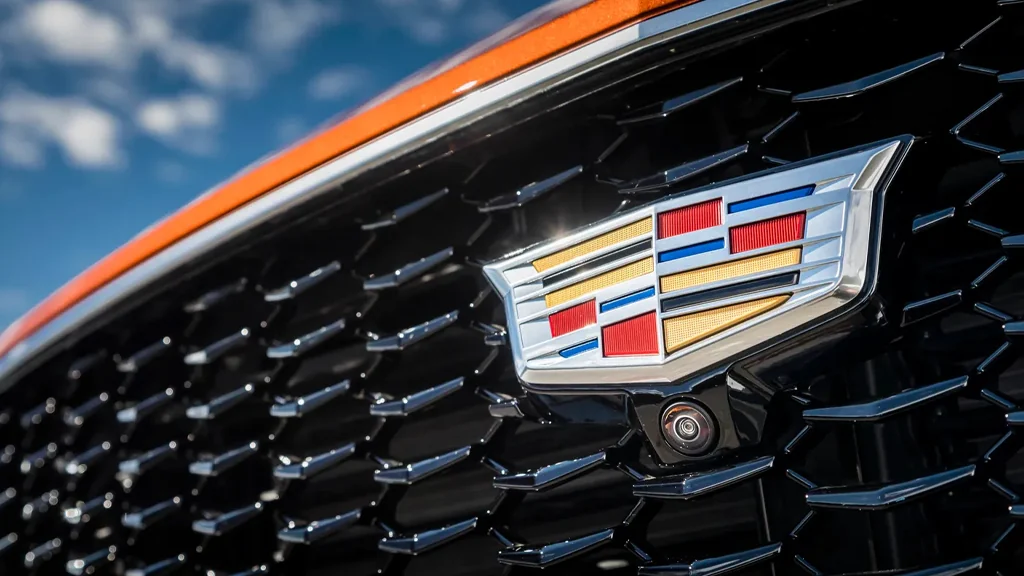
The Rise of Illuminated Logos
Here’s a question: Why did it take car companies so long to put lights behind their badges?
We’ve had illuminated signage for a century. We’ve had LED technology in cars for decades. But for some reason, the logo on the front of your car remained stubbornly, boringly dark.
Not anymore.
Today, illuminated emblems are one of the hottest trends in automotive design, both from the factory and in the aftermarket.
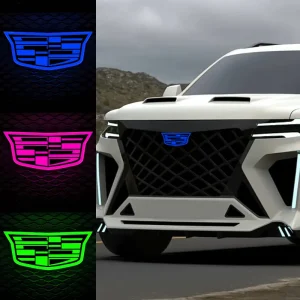
Mercedes-Benz was one of the first to popularize it with their backlit star grilles. BMW followed, offering illuminated kidney grille surrounds. Ford put a glowing blue oval on the F-150. Volkswagen lit up the front badge of the ID.4. And Cadillac? Cadillac now offers an illuminated crest on the Lyriq and other EV models, glowing softly like a digital signature.
Why now? Three reasons:
1. LEDs are cheap, small, and durable. We can put light almost anywhere without worrying about heat or bulb replacement.
2. Brands want to be visible at night. In a sea of identical headlights, your badge becomes a beacon. It says “That’s a Caddy” from three blocks away.
3. We’re living in the screen age. Our phones glow. Our TVs glow. Our dashboards glow. Why shouldn’t our grilles?
The illuminated emblem isn’t just a light—it’s a digital handshake between driver and brand.
The Modder’s Movement – Making Your Badge Your Own
But here’s the thing about car enthusiasts: we don’t always wait for the factory to catch up.
If Cadillac won’t sell you a glowing crest for your 2018 CT6, someone on the internet will. And that someone is probably selling it in seven colors with a remote control.
Welcome to the world of aftermarket illuminated emblems.
This is where personalization gets personal. You’re not just lighting up your badge; you’re choosing how it lights up and what it says about you.
The Purist: Wants a clean, white LED that looks factory-installed. If Cadillac offered it, this is what it would be.
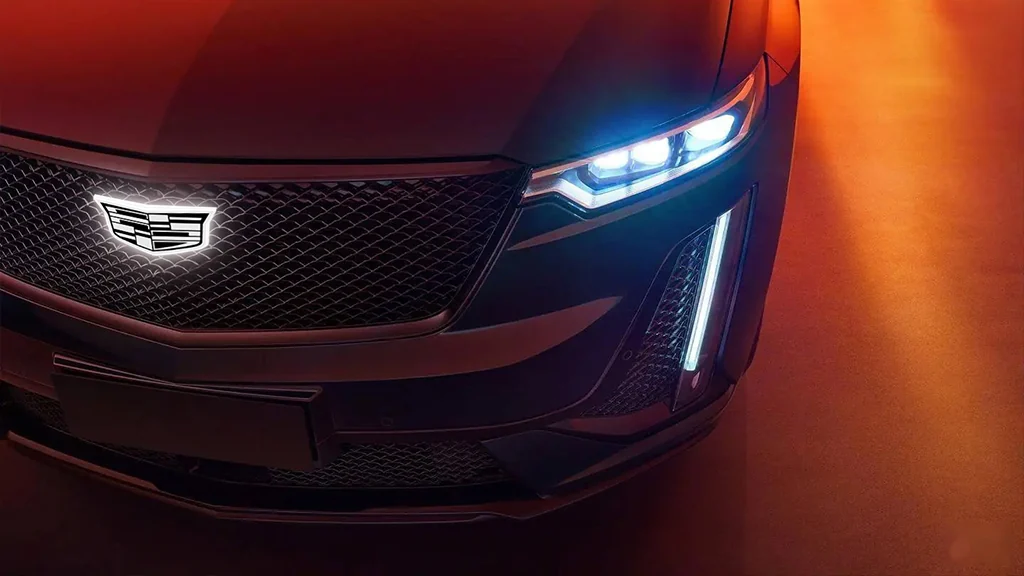
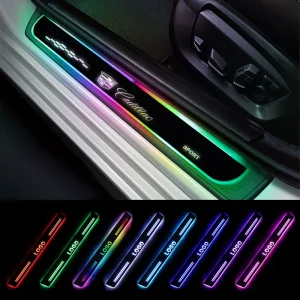
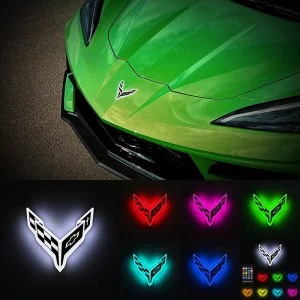
The Showman: RGB everything. Color cycles, strobe effects, remote-controlled mood lighting for the whole car. It’s not just a logo; it’s a performance.
The Patriot: Red, white, and blue. Because nothing says ‘Murica like a glowing Chevrolet bowtie on the Fourth of July.
The Stealth Modder: Blacked-out emblem that only reveals itself when the light hits it—or when the LEDs flicker on at dusk.
And it’s not just American cars. BMW, Audi, Mercedes, Lexus, Infiniti, Porsche—owners of nearly every premium brand are retrofitting illuminated emblems at an astonishing rate.
Why? Because it’s relatively cheap, surprisingly easy to install, and delivers one of the highest “cool factor” returns on investment in the entire car modding universe.
Where We Go From Here
Cadillac’s logo has survived two world wars, a dozen recessions, and the questionable styling decisions of the early 2000s. It’s been a shield, a crest, a wreath, and now a minimalist icon.
And today, for the first time in its 120-year history, it glows.
The illuminated emblem trend isn’t a passing fad. It’s the natural evolution of automotive branding. We’ve moved from stamped metal to injection-molded plastic to fiber-optic illumination. Tomorrow? Maybe holographic emblems that float above the hood. Maybe adaptive logos that change color based on your driving mode. Maybe your own custom crest, beamed onto the pavement every time you open the door.
But no matter how fancy the tech gets, the heart of it remains the same: we want our cars to reflect who we are.
Sometimes that means a hand-painted family crest on a carriage door in 1906. Sometimes that means a glowing LED shield on a silent electric SUV in 2025. And sometimes that means a custom, color-shifting infinity emblem you installed in your driveway on a Saturday afternoon.
Because your car isn’t just transportation.
It’s your signature. And now, it can glow.