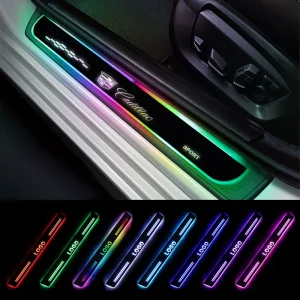
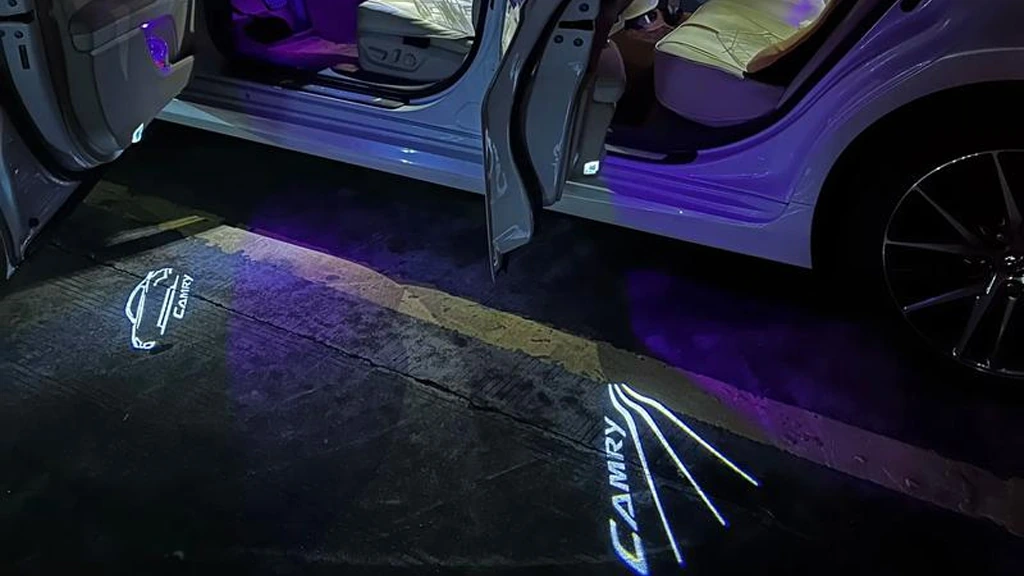
You’ve seen them. That friend who pulls up at night, opens their car door, and suddenly a crisp, glowing logo appears on the ground like magic. It looks expensive. It looks factory. And you want it.
Good news: adding door projection lights to your car is one of the cheapest, easiest upgrades you can make. Bad news: there are about a million options out there, and not all of them are worth your time or money.
Let’s cut through the noise. Here’s exactly what you need to know to pick the perfect set of door lights for your ride.
First Things First: Will They Fit Your Car?
Before you get excited about cool logos and colors, let’s address the most important question: will these things actually fit your specific car?
Here’s the deal: most door projection lights are designed to replace your existing factory puddle lights. You know those little clear lenses on the bottom of your door panels? Pop one out, and behind it is a simple bulb or LED connector.
The key is making sure the replacement light you buy has the same connector type as your car. Different manufacturers use different plugs. A BMW connector won’t work in a Toyota. Period.
What to do: Before you buy anything, look up your exact make, model, and year. Reputable sellers will list compatibility. If the listing says “universal fit” without any vehicle specifics, proceed with caution. “Universal” sometimes means “fits nothing perfectly”.
Wired vs. Wireless: Choose Your Adventure
This is the biggest fork in the road. You’ve got two paths, and both have their fans.
Wired Lights (Plug-and-Play):
These replace your factory light directly. You pop out the old one, plug in the new one, and snap it back. That’s it. They draw power from your car, so you never think about batteries. They turn on and off automatically with your door. feel factory because, well, they basically are.
The catch: You’re limited to cars that already have a light socket to replace. If your car didn’t come with puddle lights from the factory, this option gets more complicated.
Wireless Lights (Battery-Powered):
These are a newer option and perfect for older cars or anyone who doesn’t want to mess with wiring. They stick onto your door panel with strong adhesive, use motion or magnetic sensors to turn on, and run on rechargeable batteries.
The catch: You have to remember to charge them every few weeks. And they’re slightly bulkier since the battery pack is built in.
My take: If your car has factory puddle lights, go wired. It’s cleaner, permanent, and zero maintenance. If your car doesn’t have them, wireless is your friend.
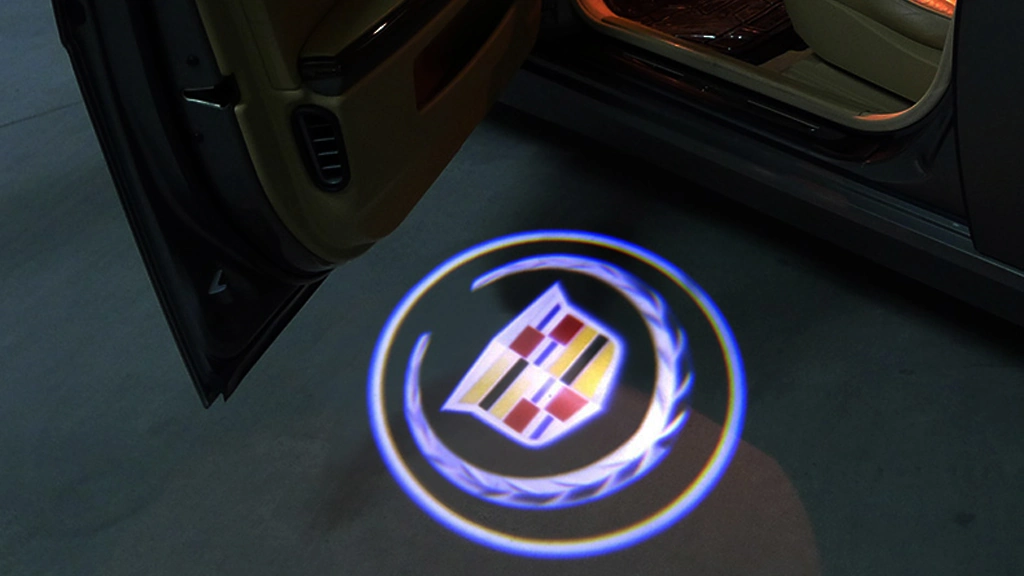
Brightness and Clarity: Don’t Settle for Dim
Here’s a hard truth: cheap projector lights look like cheap projector lights.
You want a crisp, sharp image on the ground. Not a fuzzy blob that makes people squint and ask, “Is that a logo or a smudge?”.
What to look for:
– Lumens: Aim for 200–500 lumens for good visibility at night. Too bright can actually be distracting, so don’t go overboard.
– Resolution: Higher-end lights use better lenses and produce sharper images. If the product photos show a blurry logo, believe them. That’s what you’ll get.
– LED vs. Laser: Standard LED projection is safe, reliable, and plenty bright for most people. Laser projection is sharper and brighter but costs more and has some safety considerations (don’t stare into it).
Pro tip: Look for customer photos in the reviews. Seller photos are often staged with professional cameras. Real people in driveways tell the truth.
Waterproofing Matters More Than You Think
These lights live on the bottom of your doors. They get hit with rain, snow, mud, car washes, and whatever else the road throws at them. If they’re not waterproof, they’ll die. Quickly.
Look for an IP rating of at least IP65. That means they’re dust-tight and protected against water jets. Some premium models go up to IP67, which means they can survive being dunked in water temporarily.
If the product doesn’t mention waterproofing at all? Run. You’re buying e-waste.
The Fun Part: Logos and Customization
Alright, now we get to the good stuff. What do you want shining on the ground?
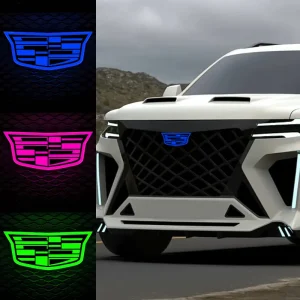
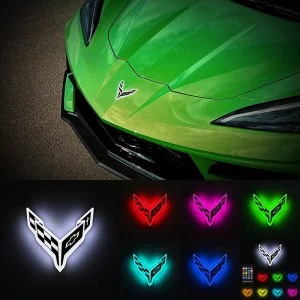
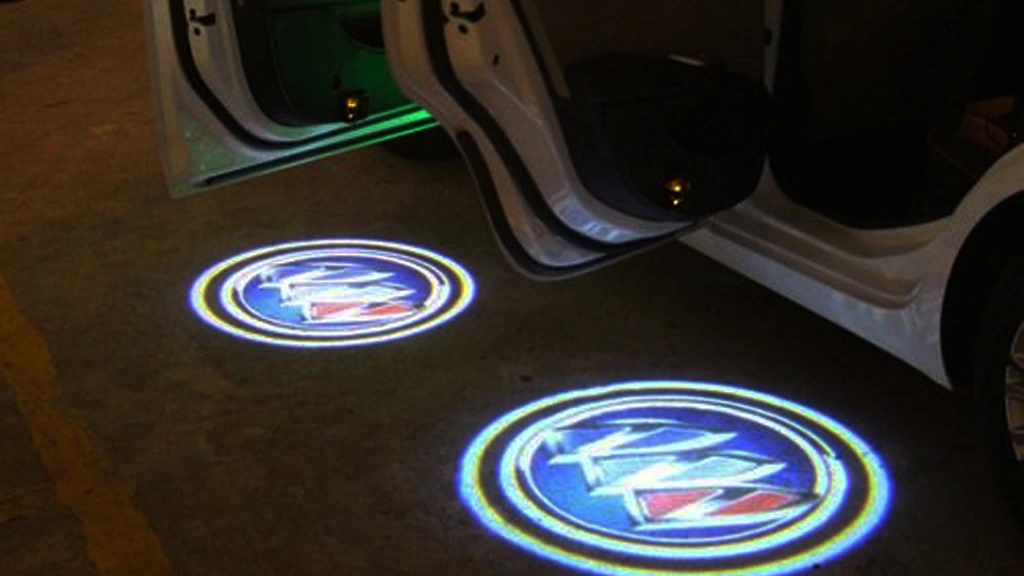
Brand Logos: The classic choice. Chevy bowties, Cadillac shields, Corvette V-shaped flags, Buick emblems. If you’re a loyalist, this is your move.
Model-Specific Badges: For the enthusiast who wants people to know exactly which trim they’re driving. “MALIBU,” “ATS,” “H2″—these add a nice personal touch.
Custom Designs: This is where it gets wild. You can get literally anything made into a projection slide. Your name. Your business logo. Your dog’s face. A inside joke. Some companies will make custom slides from your artwork.
Seasonal or Funny: Christmas trees in December. Pumpkins in October. Skeletons year-round if that’s your vibe. These are great conversation starters.
RGB Color-Changing: Want to match your interior ambient lighting or just feel like a DJ? Some high-end lights let you change colors via remote or app.
One warning: Check your local laws. Some colors (especially flashing red or blue) can get you pulled over. White, amber, and soft colors are generally safe.
Build Quality: You Get What You Pay For
I’m going to be straight with you: there’s a reason some lights cost $20 and some cost $100.
Cheap lights use cheap plastic housings that turn yellow and brittle in the sun. The lenses scratch easily. The adhesive fails. Six months later, you’re picking pieces off the ground.
Better lights use:
– Aluminum or polycarbonate housings that resist UV damage
– Sealed gaskets and O-rings to keep water out
– Quality LEDs rated for 30,000–50,000 hours
– Strong 3M adhesive that actually sticks
My advice: Read the reviews for mentions of longevity. Look for “still working after a year” comments. Those tell the real story.
Installation Reality Check
Most plug-and-play lights install in under 10 minutes. You pop out the old light with a trim tool (or sometimes just a flathead screwdriver wrapped in tape), unplug it, plug in the new one, and snap it back.
Wireless lights are even easier: clean the surface, peel the backing, stick it on. Done.
The only tricky part: If your car doesn’t have existing lights and you want a wired solution, you’re looking at tapping into your car’s electrical system. That’s doable but requires more skill—removing door panels, finding the right wires, making clean connections. If that sounds intimidating, stick with wireless or pay a shop an hour of labor.
The Bottom Line
Door projection lights are one of those upgrades that just makes you smile. Every time you open the door at night, that little logo hits the ground, and you think, “Yeah, that’s my car.”
Here’s your quick checklist before buying:
1. ✅ Does it fit your exact car model?
2. ✅ Wired or wireless—which works for your situation?
3. ✅ Is the image sharp in real customer photos?
4. ✅ Is it waterproof (IP65 or better)?
5. ✅ Are the materials decent (not cheap brittle plastic)?
6. ✅ Does it come with a warranty or satisfaction guarantee?
Answer those honestly, and you’ll end up with lights that look great, last years, and make your car feel just a little more special every single night.
Now go forth and light up that pavement. Your car’s waiting for its glow-up.
Got questions about a specific brand or model? Drop it in the comments. We’ve tested more of these things than we’d like to admit.